
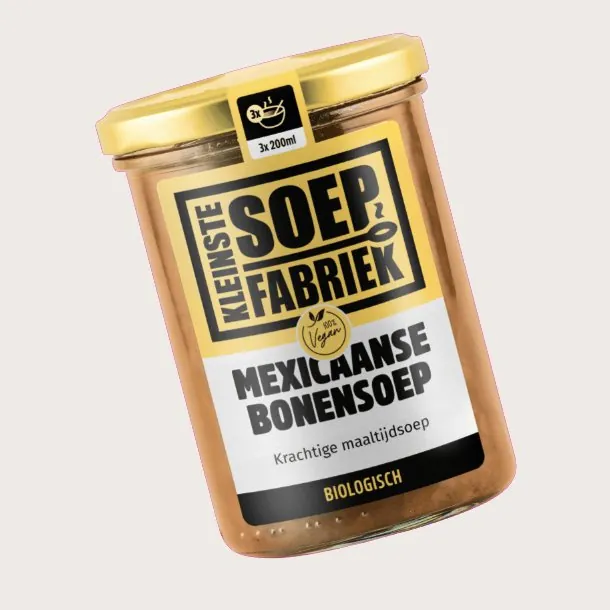
Why a 3D visualisation sells your product better than photography
The photos of your new product have finally arrived. The photographer did their best. And yet something is off. The lighting is not quite consistent across the series, that one key feature was shot from the wrong angle and that one colour variant… is missing entirely.
This is the reality of traditional product photography. You are tied to the physical world. To the limits of a studio, the cost of a reshoot and the hassle of shipping products back and forth. We see it every day. Entrepreneurs struggling with images that are ‘fine’, but not perfect. While perfection is exactly what sells online. The solution is not a better photographer, but a completely different approach: a 3D visualisation of your product.
In this article
- What a 3D product visualisation actually is
- The hard benefits compared with photography
- When 3D is the smartest choice
- What our 3D visualisation process looks like
- Conclusion: the next step for your product
What a 3D product visualisation actually is
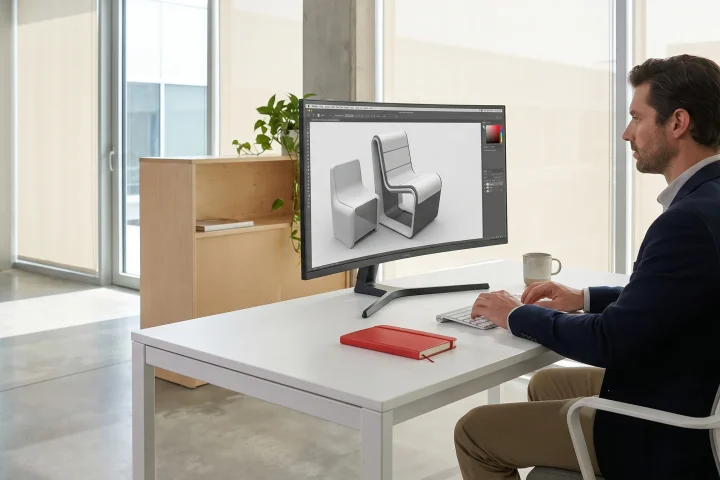
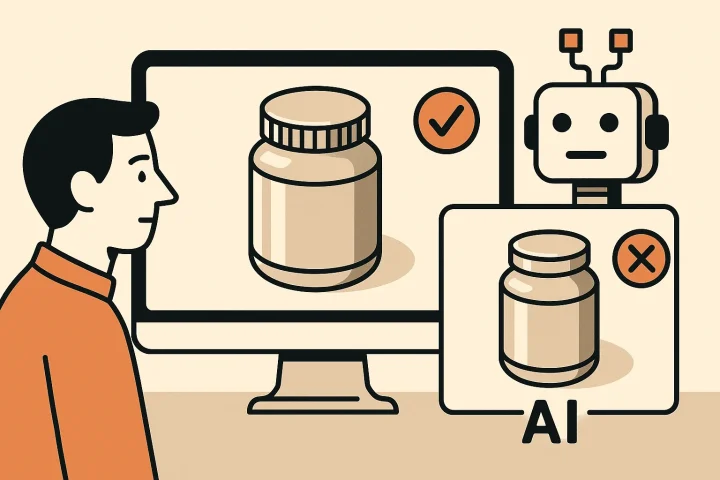
Let us clear up a misunderstanding straight away. A 3D visualisation is not a drawing or a simple computer graphic. It is a photorealistic image, built entirely digitally. Think of it as building a ‘digital twin’ of your product. Every screw, every texture, every reflection is recreated precisely in software. No camera is involved. No studio. No physical product.
The result? A perfect, clean and hyperrealistic image. But one we have 100% control over. We can show the product from every conceivable angle, tune the lighting perfectly to the mood you want to create and change materials with one click. It is not an imitation of reality. It is the perfect version of reality.
The hard benefits compared with photography
Why go for a digital model when you could also photograph the real product? The answer is not in the end result, because that can look identical. It is in the flexibility and control you gain. These are the business benefits that matter.
- Unrivalled flexibility. Want to show a product in a different colour? With photography that means sending a new product and planning a new shoot. With 3D we change the colour digitally. Done in an hour. A different background? No problem. A close-up of a specific detail? We simply zoom in on the model. The debate about product photography vs. 3D renders ultimately comes down to practical benefits like these.
- Rock-solid consistency. Say you have ten products in the same line. With photography it is almost impossible to shoot them all from exactly the same angle with exactly the same lighting. There are always small differences. With 3D visualisation every image is set up identically. This gives your web shop or Bol.com page an extremely professional, calm look, which contributes directly to your brand consistency .
- Visualise the impossible. Want to show the inside of a machine? Create an ‘exploded view’ in which all the parts float apart? Or place your product in a setting that does not exist? With 3D you can. We are no longer bound by the laws of gravity or the availability of photo locations. We can even create an exploded view or cross-section that explains how it works in a single image.
- Costs in the long run. The initial investment in building a 3D model can be similar to an extensive photo shoot. But every change after that is exponentially cheaper. No shipping costs, no studio costs, no hours for a photographer. One model can be the basis for all your images for years to come.
When 3D is the smartest choice
Is 3D visualisation always the best option? Not necessarily. For unique, handmade items, photography can capture their charm better. But for most e-commerce products, 3D is simply the smarter business choice in specific scenarios.
Think of products with lots of variations. A sofa available in 50 different fabrics and 5 leg colours. Photographing that is unaffordable. With 3D we build one model of the sofa and apply the fabrics and colours digitally. That way you can show every possible combination.
The same goes for complex or technical products. We can create cross-sections, highlight internal components or visualise the airflow through a device. Try doing that with a camera. Another very strong use is for products that do not physically exist yet. You can already build marketing material and product pages and even collect pre-orders, purely on the basis of the 3D visualisation. You validate the market before you have invested a single euro in production.
What our 3D visualisation process looks like
It may sound complex, but we have streamlined this process to make it as easy as possible for you. We do not need a physical product; good reference photos and dimensions are often enough.
- Step 1: Briefing. We start at the beginning. What is the purpose of the images? Who is the target audience? Which features do we need to highlight? We gather all the input we need.
- Step 2: 3D modelling. Our 3D artists build the digital twin of your product. This is the technical foundation, where precision comes first.
- Step 3: Texturing and lighting. We add the materials. Is it brushed steel? Matt plastic? Or glossy wood? Then we set up the virtual lights to create the perfect mood and reflections.
- Step 4: Rendering and feedback. We generate the first concept images in high resolution. You give feedback. Maybe the angle needs to be slightly different or the shadow a little softer. We adjust it until you are completely happy.
- Step 5: Delivery. You receive a set of perfect, consistent product images you can use straight away for your web shop, marketplaces, social media or print.
Conclusion: the next step for your product
A 3D visualisation of your product is not a gimmick. It is a strategic tool. It gives you control, flexibility and a level of perfection that is difficult and expensive to achieve with traditional photography. You are no longer dependent on a physical location, the right weather or the availability of all your product variants.
You invest in a digital ‘asset’ that you can reuse and adapt for years. That is not a cost; that is smart business. Stop struggling with inconsistent product photos and expensive photo shoots. It is time to take full control of how your product is presented. Curious how we can make this happen for your products? Get in touch and we will discuss the possibilities.

Melle Sikma
Helmsman
melle@brandmonks.nl