

Understanding the investment in high-quality 3D product visuals
3D render costs depend heavily on the complexity of the product, the level of detail you want and the number of views required. Because every project is unique, there is no fixed standard price. A simple product visual on a plain background is quicker to produce than a detailed lifestyle scene. By supplying existing CAD files or having several product variants rendered at once, the average cost per image can come down.

In the e-commerce market of the Netherlands and Belgium, the visual presentation of products matters for the success of a web shop. Where traditional product photography used to be the standard, more and more brands in 2026 are choosing digital product visuals. This shift brings big advantages. Once made, a 3D model works as a digital asset that can be reused for new colour variants, animations or interactive applications. Costs come down in the long run because no new location shoots are needed when a product line is expanded.
What to remember above all
The key points from this article, brought together in a compact, more visual overview.
- The impact of image quality on conversion rates on platforms such as Bol.com
- A short explanation of how a 3D project is put together
- The growing need for photorealistic images for online sales
High-quality photorealism can contribute to a better customer experience. Consumers on platforms such as Bol.com and Amazon want to be able to view a product from every angle before they buy. A detailed 3D render shows textures, materials and shapes in a way that is barely distinguishable from real photography. This can support conversion and reduce the number of returns, because the customer gets a realistic picture of the product they ordered.
For e-commerce business owners who want to optimise their product presentation, Brandmonks offers a professional Amazon Listing Design Service. This service focuses on designing product images and renders to boost online sales.
Why the cost of a 3D render varies per type of product

The total investment for a product visual is closely linked to the design and technical complexity of the object. Simple geometric shapes require less modelling time than complex organic objects with detailed structures. In addition, the availability of existing CAD files and the number of views required play a decisive role in determining the final price.
Geometric versus organic shapes
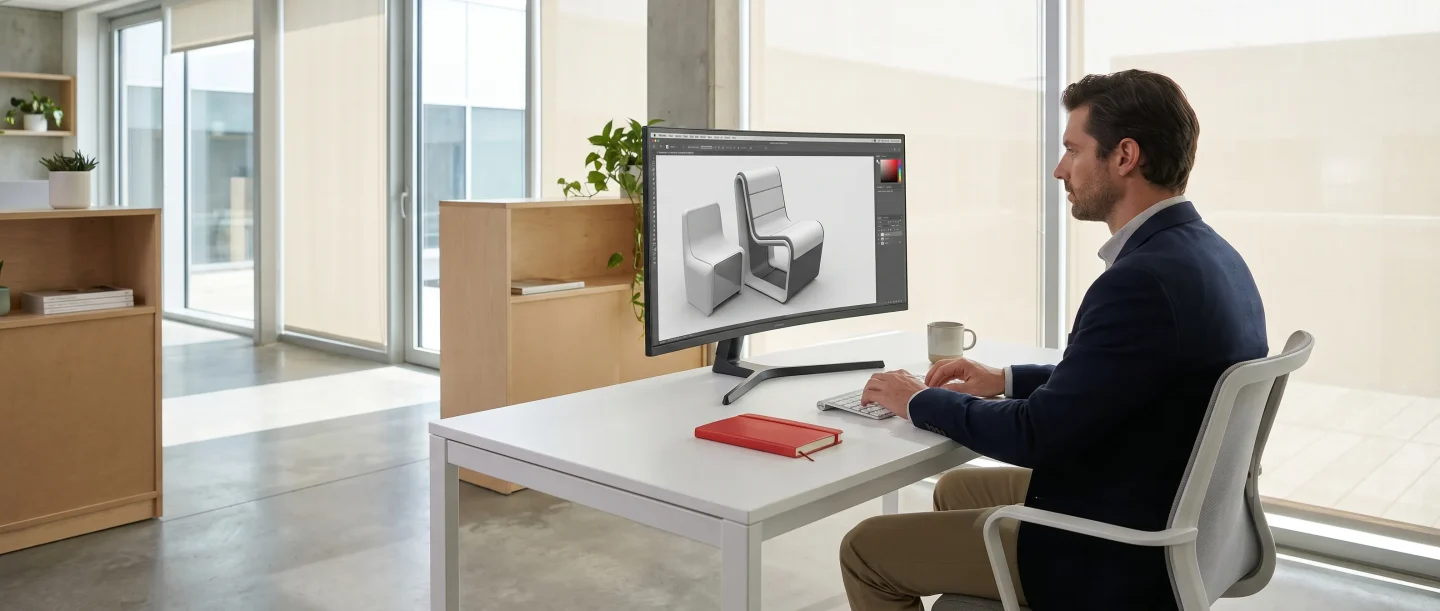
When determining the cost of a 3D design, the shape of the product is the most important factor. Products with clean, geometric shapes, such as packaging, boxes or simple bottles, are relatively quick to build digitally. These objects consist of basic shapes that a designer can model efficiently. Organic shapes, on the other hand, such as furniture with complex folds or detailed technical equipment, call for a much more intensive process. Realistically recreating these structures, textures and the way light falls on the material takes time, which affects the total price.
The saving from existing CAD files
An effective way to save on start-up costs is to supply usable CAD files from the production or R&D department. Files in formats such as .STEP or .IGS already contain the exact geometry of the product. When these files serve as the basis, the designer can largely skip the modelling phase. The focus then shifts straight to refining the materials, setting up the lighting and rendering the images. This can shorten the turnaround time and lower the start-up costs.
Economies of scale with colour variants and bulk requests
Once a product has been modelled digitally, a valuable economy of scale comes into play. Changing colours or materials on an existing 3D model is quicker than rebuilding a scene from scratch. This is an important advantage of a 3D model with several colour variants; the basis stays the same, so the average cost per image comes down. With bulk requests, where several views or product variants are produced in one go, the price per render can therefore work out more favourably.
Average rates for professional 3D product renders in 2026
Anyone exploring the market quickly notices that 3D render costs can vary widely per project. A professional basic product visual in 2026 starts from around 150 euros. This entry price usually applies to a relatively simple studio render against a neutral background. For more complex visuals, such as detailed lifestyle renders in a digital environment or interactive 360-degree views, the investment is higher because of the extra time needed to build the digital scene.
How the price of a 3D render is built up
It starts with modelling, in which the designer builds the three-dimensional geometry of the product. Next comes texturing, the process in which materials, colours and details such as reflections are applied precisely. Finally, the lighting and the final computing time for rendering determine how realistic the end result looks. Each of these steps requires specific expertise and computing capacity, which affects the final price.
Different types of renders and their price indication
The choice of visual type largely determines the size of the investment. A studio render shows the product on a plain, often white background and is ideal for e-commerce platforms. Lifestyle renders place the product in a fully digital, realistic environment, such as a furnished room or an outdoor location. This type of render is increasingly replacing expensive physical photo shoots. For a dynamic presentation, an interactive 360-degree view or a high-end 3D animation can be used, where costs rise because of the large number of frames that each have to be calculated separately.
| Type of render output | Features | Price indication (from) |
|---|---|---|
| Studio render | Neutral or white background, focus on the product | €150 |
| Lifestyle render | Digital environment, lifestyle image, virtual studio | On request |
| 3D animation or 360-degree view | Moving images, interactive display, high complexity | On request |
Are revisions included in the package price?
When comparing quotes, it is wise to check how feedback rounds are handled. Revisions are usually included in the package price, provided they fall within the scope agreed in advance. This keeps things transparent and prevents unexpected extra costs afterwards. However, if major changes to the basic design or geometry are requested after the modelling phase is complete, additional costs may be charged.
Why 3D rendering is often cheaper than traditional photography
This model can then be reused endlessly for new variants, angles and lighting without having to set up a physical studio again.
No logistics costs and maximum flexibility
With traditional photography, the logistics around products often bring unforeseen expenses. Products have to arrive at the studio undamaged, which leads to high transport costs for large or fragile goods. With 3D rendering these logistics costs disappear completely. As soon as the basic geometry has been built through 3D modelling, the product is available digitally. This offers enormous flexibility. If a manufacturer decides to expand a product line with new colours or materials, no new photo shoot needs to be planned. The designer simply adjusts the digital textures in the existing software, which drastically lowers the repeat cost per image.
The long-term value of digital assets
When evaluating 3D render costs, it is wise to weigh the start-up costs against the repeat costs in the long term. The initial start-up costs of a 3D model quickly pay for themselves when a brand needs several product variants or updates. This digital master model acts as a valuable digital asset that lasts for years. For e-commerce platforms such as Bol.com and Amazon, a consistent visual presentation is key to optimising the conversion rate. With 3D files, product images can always be generated from exactly the same angle and with identical lighting, which creates a calm and professional shop display. On top of that, existing CAD files from the production department can often serve as the basis, making the modelling phase shorter and cheaper.
This digital approach offers big advantages for brands that want to move quickly. A concrete example can be seen in the IT-Everywhere case study, where 3D design and packaging design were successfully combined for a strong online presentation.
Key factors that determine the quote for your 3D visual
How a quote for a 3D visual is built up depends on various technical and creative variables. Although the final 3D render costs differ per project, factors such as the complexity of the product geometry, the desired level of texture detail and the chosen background determine the studio hours needed. A careful inventory during the intake process helps make the proposal fit the brand’s specific wishes.
Complexity of the 3D model and the geometry
The basis of every visual is the digital model. When usable CAD files from the production or development phase are already available, this can help shorten the modelling phase. The designer can use these files as a starting point, so less manual modelling work is needed. If no digital files are available, the specialist has to build the product digitally from sketches or photos. This manual process takes more time and therefore affects the total cost of the project.
Material realism and refining textures
A photorealistic result depends heavily on the details. Accurately recreating materials such as brushed steel, transparent glass or matt plastics requires specific shaders and lighting settings. The more complex the surfaces and the higher the desired resolution of the final image, the more computing power and expertise are needed to render the materials true to life. This refinement in texture detail largely determines the quality and turnaround time of the rendering.
The chosen environment and revision rounds
The context in which the product is placed is also an important factor. A simple studio set-up with a plain background is quicker to produce than a detailed lifestyle environment in which the product is integrated into a virtual space. The number of revision rounds also affects the quote. Agreeing the brief clearly in advance helps limit the number of changes needed and keeps the process efficient.
How to save smartly on your 3D render project without losing quality
Lowering 3D render costs does not have to come at the expense of the visual quality of the final images. By making strategic use of existing digital files, bundling jobs smartly and providing a clear brief, the production process can be sped up considerably. This reduces the number of studio hours needed and avoids unnecessary revision rounds, so the budget is put to the best possible use.
Make strategic use of existing CAD data
Supplying your own CAD data is one of the most effective ways to save on a project’s start-up costs straight away. When the R&D or production department already has usable 3D files available, such as .STEP or .IGS, the designer can use these files as the basis. You can save considerable costs by supplying CAD data yourself, because the specialist does not have to build the basic geometry from scratch. This shortens the modelling phase considerably and lowers the initial modelling costs.
Go for reusability and digital twins
A big advantage of 3D visualisation over traditional photography is the reusability of the digital assets. Once made, a 3D master model can be reused for years for new colour variants, animations and interactive applications. Instead of organising a completely new photo shoot for every new product launch, you simply adjust the textures or the virtual lighting of the existing model. This makes the investment far more profitable in the long run and ensures a consistent look across the product line.
Practical money-saving tips for marketing managers
To set up a 3D project as efficiently as possible, marketing managers can take a few practical steps in advance to keep costs under control:
- Bundle jobs: Request several views, angles or colour variants in one go. This lets the studio build scenes more efficiently and lowers the average price per render.
- Provide a tight brief: Supply clear reference images, material samples and the viewpoints you want to avoid misunderstandings and extra revisions.
- Focus on the essentials: In the first phase, concentrate on the most important views you need straight away for your marketing channels and expand the library step by step later.
- Use virtual studios: Digital lifestyle environments make physical location shoots unnecessary, which saves considerably on transport and logistics.
Frequently asked questions about investing in 3D product visuals

What is the average delivery time for a 3D render?+
The delivery time of a 3D render depends heavily on the complexity of the product and the availability of usable CAD files. On average, the process for a standard product visual takes between five and ten working days. When detailed 3D files are already available, this process can be sped up considerably. With more complex projects, where the specialist has to build the model entirely from scratch or where intricate textures and lighting scenes are needed, the turnaround time can run to several weeks. A clear brief up front helps keep the turnaround time as short as possible.
Are there extra costs for rush jobs?+
Yes, most 3D studios charge a surcharge for rush jobs. When a visual has to be delivered within a few days or even within 24 hours, other projects often have to be moved or specialists have to work overtime. This translates into a higher rate, often between 25% and 50% on top of the regular 3D render costs. So it is always advisable to plan projects well in advance to avoid these extra expenses.
Do I get full ownership rights to the 3D models?+
Ownership rights to the 3D models and source files created often remain with the maker or the studio by default, unless other arrangements have been made in advance. As a client you receive the usage rights to the delivered images (the renders) as standard. Do you want to receive the source files themselves, such as the .STEP or .FBX files, so other parties can edit them later? Then an extra fee may be charged for this. It is wise to set out these ownership rights and their transfer in writing in the quote beforehand.
Is a 3D render suitable for all kinds of products?+
Yes, 3D rendering is in principle suitable for almost any physical product. Whether it is cosmetics packaging, consumer electronics, furniture or complex industrial machinery; digital visualisation offers a solution for every type of product. Even products that are still in the design phase and do not yet physically exist can be shown photorealistically this way. That makes the technology extremely valuable for e-commerce, marketing campaigns and product development.
What is the price difference between a studio render and a lifestyle render?+
A studio render shows the product against a neutral, often white or transparent background. This type of visual is relatively quick to produce and therefore has lower start-up costs. A lifestyle render places the product in a realistic, atmospheric environment, such as a furnished living room or a natural setting. Because the specialist has to design and light a complete digital scene for this, the cost of a lifestyle render is higher on average. However, the investment often translates into higher conversion on platforms such as Amazon or Bol.com. Discover the various Services of Brandmonks in the field of digital growth and product visualisation.
Choose the right balance between quality and cost in 3D rendering
Deciding on the investment in high-quality 3D visuals calls for a strategic, long-term view. Although the initial 3D render costs depend on specific factors such as the complexity of the product design and the immediate availability of usable CAD files, this technology can deliver clear benefits in the long run. Instead of repeatedly having to organise physical photo shoots for every new product variant or colour change, a digital model offers the flexibility to make changes relatively quickly. That makes product visualisation a scalable solution for e-commerce companies that want to present their online range consistently and professionally.
By making smart use of existing digital design files and bundling several views or colour variants into one job, the average cost per render can come down. Finding the right balance between an efficient technical set-up and high-quality photorealism means the visual presentation can contribute effectively to conversion and the overall growth of your brand.

Melle Sikma
Helmsman
melle@brandmonks.nl