
What are the different types of digital 3D renders and visualisations?
How 3D renders can improve your online sales
Did you know that 3D visualisations can transform the online shopping experience? From product presentations to interactive experiences, 3D has enormous power in the e-commerce world!Digital 3D renders and visualisations are indispensable in e-commerce, where visuals play a big part in attracting customers and driving sales. In this blog post we discuss the different types of 3D renders and visualisations, why they matter for e-commerce and how they can improve your online shopping experience.
- What are digital 3D renders?
- Types of digital 3D renders and visualisations in e-commerce
- Why are 3D renders important for e-commerce?
- Practical tips for using 3D renders in e-commerce
- Conclusion
What are digital 3D renders?
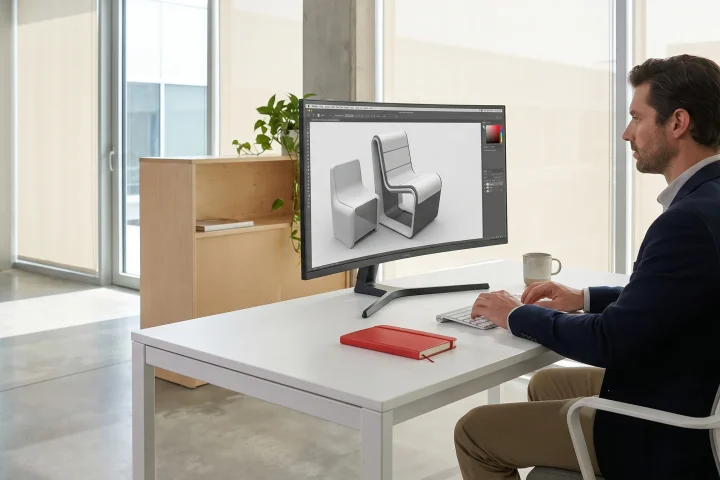
Digital 3D renders are images created with computer graphics to show a three-dimensional object or environment. These renders can range from simple sketches to hyper-realistic images. In e-commerce they are indispensable for presenting products and concepts visually, helping customers make better-informed purchase decisions.
Types of digital 3D renders and visualisations in e-commerce
There are several types of digital 3D renders and visualisations that are particularly useful in e-commerce:
- Product visualisation: This is the most common form of 3D rendering in e-commerce. Brands use it to show their products realistically from different angles and in different colours. This helps customers get a good picture of what they are buying, which reduces the chance of returns.
- Augmented Reality (AR): With AR, customers can view products in their own surroundings through their smartphones. This is especially useful for furniture and interior items, because customers can see how a sofa or lamp fits in their space.
- 360-degree product view: These interactive visualisations let customers view a product from every angle. This increases engagement and helps customers understand the product better.
- Animation: 3D animations can be used to show products in action. This can range from demonstrating how a device works to showing the unique features of a garment.
- Infographics: Infographics with 3D elements can present more complex product information in a simple and visually appealing way. This can help inform customers about specifications and benefits in a clear manner.
Why are 3D renders important for e-commerce?
Digital 3D renders offer several benefits that matter a great deal for e-commerce:
- Better customer experience: Visually appealing and informative renders make for a better shopping experience, which leads to higher customer satisfaction.
- Higher conversions: When customers can view products in 3D, they are more likely to go ahead with a purchase. This can lead to a higher conversion rate.
- Fewer returns: Customers are better informed about the products they buy, which reduces the chance of returns.
Practical tips for using 3D renders in e-commerce
Here are some practical tips for using digital 3D renders effectively in your e-commerce business:
- Choose the right software: There are several software packages available for 3D rendering and visualisation. Make sure you choose a program that is easy to use and fits your needs.
- Focus on quality: Investing in high-quality 3D visuals really pays off. Make sure the renders are realistic and show the right colours and details.
- Add AR functionality: Consider adding augmented reality to your website, so customers can view products in their own surroundings. This can increase engagement and conversions considerably.
Conclusion
Digital 3D renders and visualisations are a powerful tool for e-commerce businesses. They not only help improve the customer experience, but also increase conversions and reduce returns. BrandMonks offers expert advice and help with creating impressive 3D visualisations that raise the bar for your e-commerce projects. Get in touch with us today for more information!

Melle Sikma
Helmsman
melle@brandmonks.nl