
Consistent product images for large ranges: why image quality drifts apart without a system
Consistent product images for large ranges do not happen by themselves as soon as you create more visuals.
As product groups grow, teams change and image types expand, quality almost automatically drifts apart without a fixed logic.
In practice you see this sooner than many e-commerce teams expect. The first part of a range is often still fairly tight. Then come new SKUs, extra variants, new seasonal images, extra gallery images, additional packshot work and sometimes a separate campaign extension too. Each addition feels logical on its own. Together they often make the visual line shift slowly.
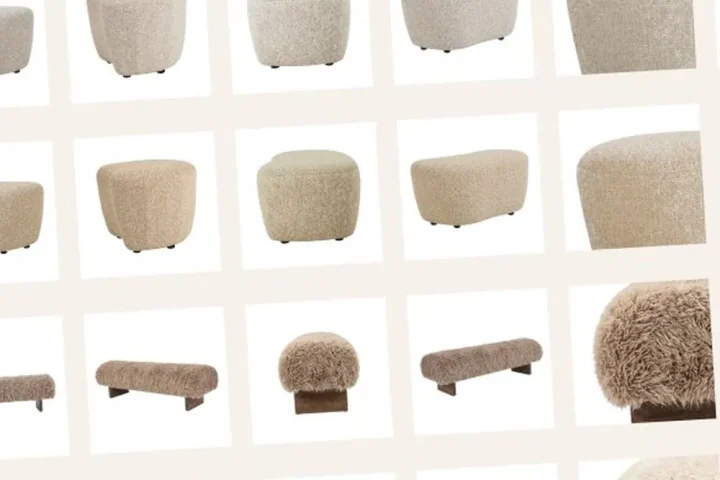
Then a familiar pattern emerges. Packshots get slightly different white space. Lifestyle images suddenly become much warmer or darker. New product groups differ in crop, shadow or feel of the material. And nobody consciously makes a wrong decision. It is simply the result of scale without fixed image rules.
That is exactly why consistent image quality is not a purely aesthetic wish, but a question of systems. If you also want to roll out product visuals faster with AI, that question becomes even more important. For the broader framework, AI product visuals for e-commerce ties in logically. And for the operational question of scale, scaling product visuals with AI ties in logically. In this guide we zoom in specifically on consistency: how to keep a large image set visually coherent without forcing every product into exactly the same mould.
What consistent product images mean at the scale of a whole range
Consistent product images do not mean every image has to be identical. It means images across the whole range recognisably work according to the same visual logic. A visitor does not need to name it consciously, but does feel straight away whether an image set is calm, professional and coherent.
At range scale, that logic goes beyond a white background or a fixed crop. It is also about how close a product sits in the frame, how much white space it gets, how light and shadow are used, how strongly colours are carried through and how packshots and lifestyle images relate to each other. As soon as that foundation shifts per product group, the range feels fragmented.
That is precisely why consistency at scale is something different from simple uniformity. An interior product, a personal care product and a technical accessory do not have to look exactly the same. But they do have to visibly come from the same system. So the rules can differ per image role or product group, as long as the way you apply those differences stays predictable.
Consistent product images are therefore essentially a manageable visual language. Not everything is the same, but everything follows the same logic.
Why visual consistency in e-commerce is more than using the same background
Many teams reduce image consistency to background colour or cutting products out. That is too simplistic. The background is just one of the most visible parts of consistency, but rarely the only factor that decides whether a range feels visually tight.
Consistency also lies in camera distance, product position, crop, horizon, shadow depth, reflection, colour treatment and how materials are rendered. Even when two images sit on exactly the same white background, they can still come from different worlds if one product is cropped too tightly, another is lit much more harshly and a third has suddenly been retouched much more smoothly.
With larger ranges there is an extra layer: the relationship between image types. A packshot can be technically tight but still clash with a lifestyle image if that lifestyle image looks much more cinematic, darker or more artificial than the rest of the line. So visual consistency also means that different image roles connect logically.
That is why a broad rule like “everything on white” rarely works as a complete solution. At most it is part of the system. The real quality lies in the combination of several rules that together form a recognisable visual language.
Which fixed image rules you need for a large range rollout
As soon as a range grows, you need image rules that are not up for debate again for every product. Otherwise not only the number of images grows, but also the number of open choices. And open choices are exactly where visual drift begins.
What usually needs to be fixed:
- how much white space a product gets by default
- which camera angles and crops are allowed per image role
- how light, shadow and reflection are handled
- which background rules apply per packshot or context image
- how much retouching is acceptable on colour, material and product edges
- when a product group gets a different set of rules
Those rules do not all have to be in a heavy manual, but they do have to be explicit. As soon as a team works on the basis of implicit taste instead of shared agreements, small differences appear that become large at scale. What looks like a nuance today becomes a break in the pattern after fifty or a hundred images.
That is why fixed image rules are not a limit on creativity, but a safeguard for coherence. They do not make deviation impossible. They just make sure deviation becomes a conscious choice instead of a side effect of fragmented production.
How to keep packshots, lifestyle images and derived visuals in one line
A large range only really feels consistent when not just the packshots are right, but also the relationship between packshots, lifestyle images and derived visuals. Many e-commerce teams still treat those image types as separate streams. As a result each part can look neat on its own, while the image set as a whole still falls apart.
For packshots, the foundation often lies in clarity and calm. They need to show the product in a functional and reliable way. For that layer, creating AI packshots ties in logically. Lifestyle images then add context, use or experience. For that layer, AI lifestyle images for products ties in logically.
The mistake happens when the two layers have no shared visual logic. Then packshots become extremely clean and technical, while lifestyle images are suddenly very warm, cinematic or overstyled. Or the other way round: lifestyle images feel premium and credible, but packshots are messy and too generic. In both cases a visitor does not get the feeling of looking at a coherent product line.
The solution is not to make all images the same. The solution is to decide in advance how these image roles complement each other. Which colour temperature stays within the bandwidth. How much contrast makes sense. How much realism the context layer has to keep. And how you still recognise in a lifestyle image the same product you saw in the packshot. So consistency is not just in each image separately, but above all in the transition between them.
When product groups may deviate without causing visual chaos
Not every product group calls for exactly the same image treatment. Nor does it need to. A technical product, a fashion item and an interior product often have a different emphasis in material, scale or context. So consistency does not mean flattening every product group visually into a single standard.
What is needed is a controlled way of deviating. A product group may get different rules when there is a clear reason for it. For example because detail accuracy becomes more important, because scale needs to be shown better in context or because variants play a bigger role in the buying decision. For that last layer, rolling out variants visually without a new shoot ties in logically.
The problem only arises when deviation happens without direction. Then one product group gets looser crops, another darker lifestyle images and a third suddenly much more aggressive retouching, without a recognisable system logic underneath. Then difference does not feel like nuance, but like randomness.
So the practical rule is simple: only let product groups deviate if the reason for and the limit of that deviation are fixed too. Then variation stays manageable.
How AI helps make product images more consistent
AI can greatly improve image consistency, but only when there are already clear rules within which that consistency must be safeguarded. Without that framework, AI speeds up not only good choices, but bad ones too. Then you get output faster, but not necessarily a tighter visual line.
The biggest gain from AI often lies in repeatable adjustments. Think of standardising backgrounds, cleaning up packshots, carrying the same image treatment through product families or expanding an existing base image set in a controlled way. Once fixed image rules are clear, AI can help maintain them more consistently at a larger scale than fully manual production.
But AI also has a clear limit. If source images are weak, product groups are poorly defined visually or review criteria are missing, AI makes the inconsistency less visible at the front end and bigger at the back end. It then seems as if everything is getting faster and neater, while material, scale, light or crops slowly start to drift apart.
That is exactly why AI works best as a consistency enforcer, not as a replacement for visual logic. And when the base image set is not solid at all yet, a round of product photos is sometimes still the better first step. For the broader boundary between AI and other production routes, AI as an alternative to product photography ties in logically.
Where image consistency usually goes wrong in large ranges
In large ranges, image consistency rarely goes wrong in one go. The problem usually arises in small shifts that pile up. That is exactly why teams often only notice it late. Each individual image still seems defensible, but together they create a messier line.
Common sources of visual drift are:
- new product groups added without adjusted image rules
- batches finished slightly differently by other people or tools
- packshots and lifestyle images produced separately from each other
- source material of varying quality
- seasonal or campaign layers that deviate temporarily and then quietly stick around
- AI output that looks visually neat but does not stay exactly within the same bandwidth
The tricky part is that these mistakes are often not spectacular. It is about slightly more contrast, slightly less white space, slightly different shadows or slightly warmer context images. But it is exactly those kinds of differences that make a large range feel restless. They undermine the professional impression without anyone being able to point to a clear moment when it went wrong.
That is why image consistency has to be actively monitored. Not just at the end, but throughout the entire production flow.
How to set up review and quality control for consistent product images
Review is only really useful when it does not just check whether an image looks good, but whether it stays within the agreed visual logic. As long as review is mainly a discussion of taste, consistency stays fragile. With large numbers that becomes even clearer, because individual opinions then have more and more influence on a line that is supposed to stay stable.
A workable review framework usually looks at:
- does the image match the fixed rules for crop, white space and position
- do light, shadow and colour stay within the agreed bandwidth
- does this image feel logical next to similar products in the same group
- do packshot and lifestyle image still connect with each other
- is the image strong enough to serve later as a reference for future batches
That last point in particular is often underestimated. An image that seems just about acceptable can still be dangerous if it later quietly becomes the new reference point for future output. Then inconsistency builds up layer by layer.
So good quality control is not just rejecting or approving. It is also guarding which image may become the new standard. Once teams understand that, review becomes a way to protect consistency instead of just correcting mistakes.
Comparison: fragmented image production versus a consistent image operation
The difference below shows clearly why some ranges still feel restless despite perfectly good individual images.
| Aspect | Fragmented image production | Consistent image operation | Why this works better |
|---|---|---|---|
| Image rules | Rules mainly live in the heads of the makers | Rules for crop, light, background and deviation are fixed | Less visual drift |
| Packshots and lifestyle images | Are created as separate streams | Follow the same underlying visual logic | More coherence between image types |
| Product group differences | Deviations arise ad hoc | Deviations are deliberate and limited | Variation stays manageable |
| AI output | Speeds up production without a fixed quality limit | Reinforces existing image rules at scale | Faster without messier output |
| Review | Approval is mainly driven by taste | Review checks against fixed quality and line rules | Less discussion and better line control |
| Result | Good individual images without a strong line | Recognisable range with a stable visual language | More professional impression at scale |
Frequently asked questions about consistent product images for large ranges
What are consistent product images?+
They are product images that work according to the same visual logic across a range. They do not have to be identical, but they do recognisably follow the same rules in crop, light, background, context and image role.
How do you keep packshots and lifestyle images consistent?+
By not only optimising each image type separately, but also defining how the two layers relate to each other. Packshots and lifestyle images should noticeably come from the same visual world.
Which image rules should you define first?+
You usually start with white space, crop, camera angle, light, shadow, background and the limit for acceptable retouching. Those are the rules where visual drift arises fastest.
Can a product group deviate from the standard?+
Yes, as long as that deviation is deliberate and stays clearly limited. Differences per product group make sense, but only if it is also fixed why they exist and how far they may go.
Does AI help make product images more consistent?+
Yes, but only when the image rules are already clear. AI can speed up repeatable consistency, but it increases the chaos if the foundation is still too loose.
How do you prevent visual drift in large ranges?+
By making image rules explicit, not letting review lean on taste and always testing new batches against fixed reference images. Consistency only stays strong if the standard is actively monitored.
Conclusion: consistent product images come from fixed logic, not chance
Consistent product images for large ranges only emerge when image quality no longer relies on individual good choices, but on fixed rules that stay repeatable as the range grows. Then consistency is no longer a matter of taste or luck, but of manageable visual logic.
That is where the real gain lies for e-commerce teams too. Not in making everything identical, but in a system in which packshots, lifestyle images and product group differences together form a recognisable line. Want to translate that into your own image rules, product groups and visual flow? Book an introductory call.

Melle Sikma
Helmsman
melle@brandmonks.nl