


Amazon listing optimisation in 2026: what really determines your results
Many Amazon sellers do get traffic, but too few profitable orders. That is rarely down to a single detail and almost always to the sum of title, images, copy, indexing and operational quality.
At BrandMonks we see that strong results come when your listing is not treated as a separate piece of text or a separate visual, but as a commercial system you can measure and adjust.
In this article we zoom in fully on Amazon listing optimisation: what to improve first, how to prioritise and how to work at scale without losing quality. If you are looking for the broader framework of channel strategy first, marketplace performance is the logical starting point. Want to go deeper into steering conversion across your account afterwards? Then continue to increasing marketplace conversion.
Why many Amazon listings don’t convert despite visibility
A listing can be perfectly visible and still underperform. In practice we usually see three causes at once. The message isn’t sharp enough for the search intent, the order of information doesn’t support quick decisions, and trust isn’t built fast enough in the first few seconds.
You see it in behaviour: impressions, reasonable clicks, but too few add-to-carts and too much hesitation just before purchase. Teams then often respond by cutting the price, while the real problem lies in the product page itself.
Quick signs that your listing structure is the problem:
- CTR is acceptable, but conversion lags behind.
- Customer questions keep coming back to basic information that should already have been on the page.
- Return reasons point to expectation versus reality.
- You have to compensate with discounts too often to hold on to volume.
If you recognise these signs, a listing audit is the right first step.
Amazon listing audit: a quick diagnosis of titles, copy, visuals and indexing
A good audit is not a report to file away, but a decision tool. You want to see quickly where the biggest leaks are and in what order to intervene.
Audit on four layers
Layer 1: relevance
Check whether your title, attributes and search terms match real search intent. A field full of keywords is not enough if the priorities are wrong.
Layer 2: persuasion
Assess whether bullets and description translate benefits into concrete outcomes. Specs without context rarely increase conversion.
Layer 3: visual clarity
Measure whether your image order removes doubt. A beautiful main image without logical follow-up images often leaves too many questions open.
Layer 4: indexing and findability
Check backend keywords, attributes and variation set-up. Without good indexing you miss relevant traffic, even with strong copy.
In the audit, work with priorities A, B and C. A is directly critical to revenue, B is important but not urgent, C is refinement after the first improvement cycle. That way you don’t lose time on small edits while the big leaks remain.
Title, bullet points and product description: a structure that reduces purchase friction
Amazon listing optimisation usually starts with the text layer, because that is where most of the friction and lack of clarity sit. Even so, it is not about more words, but about a better order.
The working order we use
Title first
Place product type, key benefit and relevant variant information in the right order. The title has to be both findable and immediately understandable.
Then bullets
Bullets shouldn’t just list features, but above all answer the question: what does this give me in use? Each bullet should remove a small objection.
Then the description
The description is your space for context, application and limits. It is precisely the limits that reduce mismatch and returns.
A practical rule of thumb: if a customer question keeps coming back in reviews or support, that information is probably missing from your listing or in the wrong place. Then the solution is usually structure, not extra marketing language.
Product images on Amazon: requirements, order and impact on conversion
In many categories, the image decides whether someone reads on. That is why visual logic is just as important as copy. A strong listing uses images as a decision path, not as a loose gallery.
A workable image order is:
- main image with maximum clarity and immediate understanding of the product;
- context image showing the situation of use;
- detail image for material, finish or functionality;
- benefit image that makes a buying argument concrete;
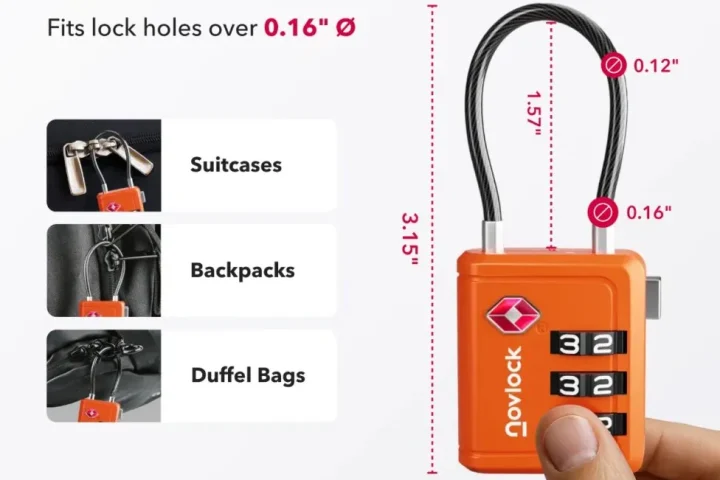
- scale or size image to prevent wrong expectations.
In visual optimisation we always look at how it fits with the title and bullets. If image and text create different expectations, trust drops and return pressure rises. On Amazon in particular, where comparisons happen fast, that inconsistency works against you straight away.
For teams that want to secure visual production professionally, we often combine this with product images (3D, AI and image editing) and content design, so creative quality and conversion goal tell the same story.
Backend keywords and indexing checks: findability without polluting your copy
Backend keywords are not a dumping ground and not a replacement for strong visible copy either. They are meant to cover relevant intent variants that you don’t need to place naturally in the front end.
What to do and not do in backend keywords
- Use intent variants that genuinely match how the product is used.
- Avoid repeating terms that are already prominent in the title and bullets.
- Don’t add irrelevant terms for artificial reach.
- Keep the structure clean so you can trace later what you changed.
Besides keywords, you also need to check attributes and listing fields. Incomplete or inconsistent fields limit findability and can indirectly hold back your ranking. That is why indexing checks belong in your monthly rhythm as standard, not just at launch.
Increasing Amazon conversion without cutting the price: listing quality plus buy box logic
Many sellers try to fix conversion dips with discounts. That can work temporarily, but it makes your model vulnerable when margin comes under pressure. A more sustainable route is improving listing quality, so price doesn’t become your only lever.
Conversion and buy box are related, but they are not the same. The buy box is also influenced by delivery reliability, availability and account quality. That is why price never works in isolation from execution.
Practical decision rules for teams
- Only lower the price if listing quality is demonstrably up to standard on the key elements.
- Fix information leaks first if return reasons and review feedback point to them.
- Link price promotions to measurement windows with clear stop criteria.
- Stop compensating with price once volume only grows below your margin threshold.
Want to steer on this across your account? Then increasing marketplace conversion is the logical next step.
Scalable Amazon listing design: templates, components and variant roll-out
This is often where the biggest operational difference lies between one-off improvements and real growth. Without a system, every new listing becomes a new project. With a system, it becomes a repeatable process.
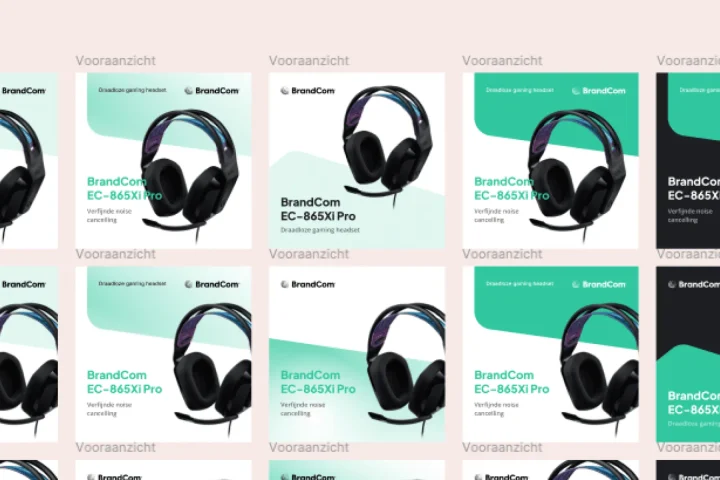
That is why at BrandMonks we set up listing production at scale in Figma, with components, fixed blocks and template logic per product type. That way you can roll out variants and product ranges much faster with consistent quality.
What this delivers in concrete terms:
- shorter turnaround time per new listing;
- fewer revision rounds and less noise in feedback;
- consistent brand language across multiple ASINs;
- faster updates when the product or market changes.
For teams that want to secure this in execution, we often link listing templates to Amazon listing optimisation, so design, copy and performance run to the same standard.
30-60-90 execution plan: from one-off edits to a rhythm that keeps working
A plan only works if it speeds up decision-making. That is why we keep the first ninety days simple and strict on priority.
Days 1 to 30: diagnosis and stabilisation
Select the listings with the most impact, run an audit and fix the biggest friction in title, bullets and image order.
Days 31 to 60: targeted optimisation
Test improvements per listing group with fixed measurement windows. Keep changes limited per cycle so you can see cause and effect.
Days 61 to 90: roll-out and safeguarding
Roll out proven structures to variants and product ranges. Record template and component choices, including KPI ownership per listing group.
This approach makes optimisation predictable. Your team then no longer works on incidents, but on fixed decision rules.
Common mistakes in Amazon listing optimisation and how to avoid them
Most mistakes are not technically complicated, but they keep coming back structurally.
Mistake 1: too much focus on keywords, too little on buying logic
A listing can be technically correct and still fail to convince. Solution: write for decision moments, not for search term density.
Mistake 2: visually strong, vague in content
Beautiful images without clear claims increase doubt. Solution: link every image to a specific buying argument.
Mistake 3: no audit rhythm
Without fixed checks you stay reactive. Solution: plan monthly audits with clear A-B-C priorities.
Mistake 4: price as the default solution
Constant discounts undermine margin and position. Solution: optimise listing and service quality first, and only then adjust the price.
Mistake 5: no scalable production approach
Without templates and components, growth becomes slow and inconsistent. Solution: build a fixed production flow for variants and product ranges.
Frequently asked questions about Amazon listing optimisation
How quickly do you see the effect of Amazon listing optimisation?
On key listings you often see movement in CTR and conversion within a few weeks, provided you work with fixed measurement windows and clear change logic.
What matters more: title or images?
Both are vital. The title often wins the first scan for relevance, images often win the quick trust check. The best result comes from the two working together.
Do you always need A+ content to grow?
Not always. For simple products, basic listing optimisation can already deliver a lot. For more complex products, Amazon A+ content is often a strong next step.
Should you adjust backend keywords every month?
Not necessarily every month, but do evaluate them periodically. Adjust them when search intent, competition or product position changes.
Can you improve without cutting the price?
Yes. In many cases the biggest gain lies first in a better order of information, stronger visuals and less doubt on the product page.
When is outsourcing smart?
When there isn’t enough internal capacity to steer copy, visuals and iteration structurally. Then specialist execution is often faster and more economical than continuing to improvise.
Conclusion: from one-off listing tweaks to predictable growth on Amazon
Amazon listing optimisation only really works when you approach it as a system. Not just better text or better images, but a fixed combination of relevance, persuasion, findability and execution discipline.
At BrandMonks we translate that combination into a practical way of working: audit, prioritisation, improvement cycles and scalable production with templates and components. That way you don’t just improve a few listings, but scale up structurally across variants and product ranges.
Want to apply this to your range? Then book an intake call. Together we will decide which listings offer the most leverage and which order leads fastest to measurably better results.
Further reading:
- Marketplace performance
- Increasing marketplace conversion
- Amazon A+ content
- Bol listing optimisation

Melle Sikma
Helmsman
melle@brandmonks.nl