
Selling via Bol.com in 2026: what it really asks of entrepreneurs
Selling via Bol.com is still a strong growth opportunity, but it has long stopped being a simple extra sales channel. If you want to grow today, you have to manage margin, conversion, logistics and customer experience at the same time. As soon as one of those falls behind, you see it straight away in visibility and profit.
At BrandMonks we see every day that entrepreneurs mainly get stuck on coherence. Separate improvements work for a short while, but without a fixed structure the results stay erratic. That is why you need to approach selling via Bol as a complete commercial and operational system, not as a one-off set-up.
In practice this means aligning your decisions on product choice, listing quality, shipping model and pricing strategy. A good product with weak content sells less than it should. A sharp price with poor logistics performance pushes your ranking down. And a strong listing without margin discipline delivers revenue on paper, but not healthy growth.
We therefore work in a clear order. First we get the economic basics right. Then we improve visibility and conversion. Only after that do we scale up volume. That order stops you from selling harder while your net result actually drops.
For entrepreneurs who already sell on marketplaces and want to professionalise their execution, our marketplace programmes are often the logical starting point. There we link strategy directly to execution: from listing and images to process and performance.
Getting started on Bol: account, terms and first choices
Getting started on Bol is technically quick, but the quality of your first choices determines how much room you have to scale later. Many accounts start with too little preparation, so after a few weeks teams are mostly correcting instead of improving.
A good start consists of three layers.
Layer 1: business basics
Make sure your registration, administration and payout structure are flawless. Think of correct company details, clear invoicing and firm agreements on who is responsible internally for account management.
Layer 2: operational basics
Decide up front how you will organise stock, order processing, customer service and returns handling. Without a clear division of tasks, speed comes at the expense of quality, and you eventually see that in your performance.
Layer 3: commercial basics
Do not just pick the first products that are available, but start with a set where margin, competitive pressure and distinctiveness are in balance. That stops you from ending up under price pressure from day one.
A strong start usually also includes this minimum checklist:
- a clear margin target per product group;
- a realistic delivery promise;
- a regular review of return reasons;
- an owner per core KPI;
- a plan for listing iterations in the first 60 days.
If you put these basics in place properly, you build up usable data from the first month. And it is exactly that data that determines whether you can scale in a controlled way later or keep fighting fires.
Costs of selling via Bol: commission, logistics, returns and margin
The most common mistake when starting on Bol is calculating too narrowly. Many entrepreneurs only look at the purchase and sales price, but forget the full chain of costs. As a result a product looks profitable until returns, handling and operational hours are included.
A healthy cost model contains at least four layers. Layer one is commission per category. Layer two is logistics, including pick, pack, shipping and any storage. Layer three is the impact of returns. Layer four is overhead: support, content maintenance and corrections.
A simple calculation shows straight away why this matters. Sales price 49.99. Purchase price 18.00. Commission and platform costs 7.50. Logistics 5.00. On paper, 19.49 is left over. But with a return rate of, say, 10 per cent, plus extra handling and time, your effective margin often drops much faster than expected.
That is why we do not steer on a single profit figure, but on a safe margin range. As long as a product stays within that range, you can scale. If it drops below, you first need to correct on content, price, logistics or range.
| Model | Advantage | Disadvantage |
|---|---|---|
| LVB (Logistics via Bol) | Strong delivery reliability and easy to scale | Storage and handling costs can squeeze margin |
| Shipping yourself (LVS) | More control over packaging and process | More operational pressure and a higher chance of errors |
| Hybrid model | Optimise per product group on cost and service | More complexity in planning and management |
LVB or LVS: the logistics choice that determines your profit
LVB or LVS is not a preference, but a strategic choice per product group. Yet we often see teams stick to one model out of convenience, even when the economic logic has already changed.
LVB usually works well for predictable products with stable demand and relatively low sensitivity to errors. You gain reliability and operational calm. LVS can be stronger for products that need specific handling, have a slower turnover rate or in situations where you want more control over costs and customer experience yourself.
Most growing businesses eventually end up with a hybrid approach. They combine the scale of LVB with targeted in-house fulfilment where that makes more commercial sense. That calls for a bit more process discipline, but often gives a better balance between margin and service.
Indicative logistics trade-off for marketplace sellers
Indicative score. Always assess per product group, turnover rate and margin for error.
Ranking factors on Bol and winning the buy box without a race to the bottom
Many sellers think ranking is mainly about keywords and price. In reality the interplay is broader. Your visibility depends on relevance, conversion signals and operational reliability. That is exactly why the lowest price does not win automatically.
Relevance starts with correct product information, logical categorisation and a clear title structure. Conversion is about how persuasive your content and images are. Reliability is about delivery quality, cancellations, return rates and customer experience. If one of those pillars is structurally weak, it becomes hard to stay steadily near the top.
The same logic applies to the buy box. A seller with a slightly higher price can still win if their service performance and customer trust are better. That means your pricing strategy always has to be linked to the quality of your execution.
We therefore recommend a ranking approach with three fixed routines:
- a weekly check on visibility, click-through rate and conversion;
- a fortnightly listing and image iteration on your most important SKUs;
- a monthly review of logistics and service performance.
This rhythm stops you from only stepping in after performance has already dropped. It also gives you a head start on sellers who only react to incidents.
If you want to improve your buy box and ranking for the long term, do not look for tricks, look for consistency. It is exactly that consistency that builds the trust platforms reward.
Bol listing optimisation: title, bullet points, description and content quality
A listing on Bol has to be findable and convincing at the same time. Too much focus on technique makes the copy unreadable. Too much focus on marketing makes the information vague. The best listings combine both without noise.
Strong listing copy follows a fixed structure.
Title: clear and specific
Put the main search intent early in the title and add the distinguishing feature straight away. Avoid repetition and overloaded titles that look as if they were written mainly for algorithms.
Bullet points: benefits instead of loose claims
Good bullets translate features into outcomes. Not just “what is it”, but above all “what does it give the buyer”. That reduces doubt and increases click-through to purchase.
Description: context and expectations
The description has to answer questions before they arise. Think of use cases, limitations, care and practical details that prevent returns.
Content quality rises quickly when you work with fixed templates. That is why many teams use a combination of listing design template, content design and Bol listing optimisation to combine speed and consistency.
An important detail: optimisation is not a one-off project. Every change in competition, price level or customer behaviour calls for new iterations. If you set up listing quality as an ongoing process, you usually see the biggest gains in the longer term.
Product images and visual design: from clicking to buying
In many categories, the image decides before any text is read. Especially on mobile, a listing is judged in seconds. That is why visual quality is often the fastest lever for a better click-through rate and conversion.
A strong image set does more than show the product. It has to remove uncertainty and build confidence to buy. That works when every image has a clear function: grab first attention, explain benefits, show use and reduce doubt.
In practice we usually recommend this order:
- main image with maximum clarity and focus;
- context image that shows the use case straight away;
- detail image for material and finish;
- comparison or benefit image with concrete arguments;
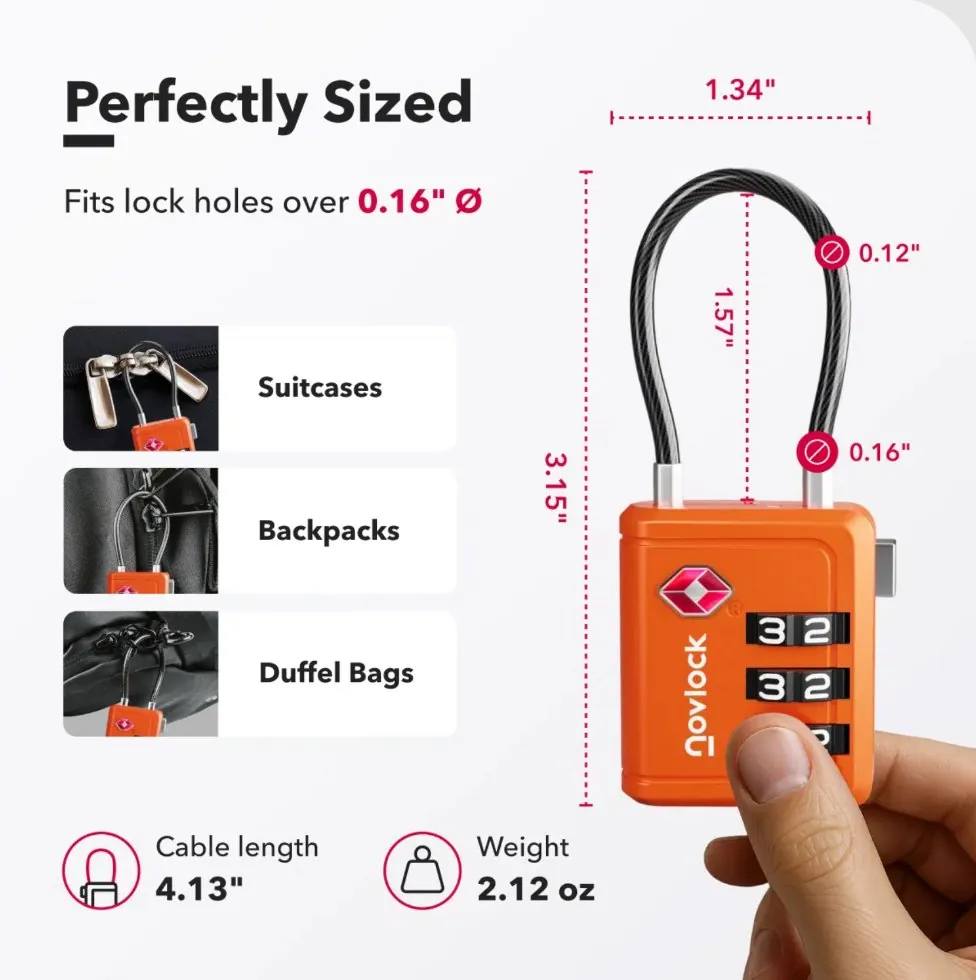
- size or scale image for realistic expectations.
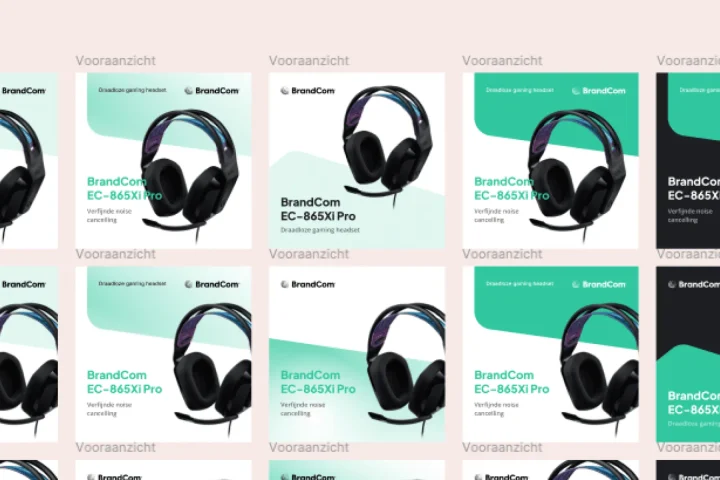
For teams with lots of SKUs, execution at system level is important. That is why at BrandMonks we often work with Figma components and template blocks, so variants and product ranges are rolled out faster and more consistently. The in-depth side of that approach is on bol listing optimisation.
Indicative impact factors on listing results
- Product positioning
- Listing copy and structure
- Image quality
- Logistics reliability
Indicative breakdown. Actual impact varies by category and competitive pressure.
Performance score, seller score and returns policy: operational discipline
Commercial growth on marketplaces only stays stable if your operational quality grows with it. Many sellers invest mainly in visibility, but then lose position through service problems that slowly build up.
That is why we steer not only on revenue KPIs, but also on performance KPIs. Think of delivery reliability, cancellations, return rate, response time and customer rating. Together these metrics determine how reliable your account is seen to be.
Your returns policy is key here. High returns are rarely pure “bad luck”. Usually you see recurring causes: unclear product information, wrong expectations created by images, or poor instructions after purchase. As soon as you analyse those patterns in a structured way, you can often achieve clear improvements within a few weeks.
An effective monthly cycle contains:
- top return reasons per SKU;
- a concrete content change per reason;
- measuring the effect on return rate and review score;
- a decision on whether product, price or logistics needs to be revised.
Your seller score and performance indicators also deserve regular attention. Not because the admin requires it, but because they directly affect your commercial room to manoeuvre. If you perform steadily on the operational side, you get more leeway in visibility and scale.
This discipline may sound less exciting than new campaigns, but in practice it is often the difference between short peaks and lasting growth.
Amazon listing optimisation: what to adjust when you expand
Many entrepreneurs grow via Bol first and then want to move on to Amazon. That makes sense, but a copy-paste approach rarely works well. Amazon calls for the same basic principles, but with more precision and tighter execution.
The core stays the same: relevance, persuasiveness and reliability. The difference is in the level of detail and the competitive pressure. Small inconsistencies in structure or presentation can affect performance faster on Amazon.
When expanding to Amazon, we therefore always recommend a controlled start with a limited set of products. That way you can refine processes, content and expectations without immediately taking on broad operational pressure.
Important adjustments when making the move:
- rebuild listing copy based on Amazon-specific logic;
- match the image order to the category and competition;
- safeguard brand consistency across multiple listings;
- work with clear KPIs for the first 60 to 90 days.
For teams that want to take this step professionally without months of trial and error, Amazon listing optimisation and UI/UX design fit well on top of the existing Bol foundation.
The gains are not in putting lots of products live quickly, but in building a stable quality standard early on. From there you can broaden in a controlled way.
Amazon A+ content, Brand Registry and backend keywords in practice
To many sellers, A+ content, Brand Registry and backend keywords sound like separate tactics. In reality they only work well when they are part of a coherent brand and listing strategy.
A+ content is especially strong when you sell complex products, have clear differentiation or are in a category with lots of similar sellers. Then extra content helps build trust and make the choice easier.
Brand Registry is important because it gives you more control over brand presentation and protection. But registration on its own does not deliver growth. The value only comes when you translate that control into consistent quality in copy, visual storytelling and proposition.
Backend keywords are then the fine-grained layer. They help cover additional search intents without cluttering your visible copy. So use them in a targeted, relevant way, not as a dumping ground for loose terms.
A practical order that often works:
- first a high-quality basic listing;
- then A+ modules with a clear storyline;
- next, refine the backend for intent variants;
- finally, recalibrate periodically on performance and competition.
If you respect this order, you build a stronger position step by step without noise. If you try everything at once without a foundation, you often get lots of work and little effect.
Amazon buy box factors and pricing strategy with a healthy margin
For many Amazon sellers, the buy box is a core driver of revenue. Yet the fight for it is often fought too narrowly: lower the price and hope for volume. That rarely delivers lasting profit.
Buy box performance is influenced by a combination of price, availability, fulfilment quality, account reliability and customer experience. So a seller with the very lowest price can still lose market share if other signals are weaker.
A healthy buy box strategy therefore works with floors and decision rules. You decide up front at which margin you will or will not follow price moves. That stops you from buying volume at a structural loss.
Our practical guideline:
- define a minimum net margin per product group;
- link pricing decisions to fulfilment performance;
- only lower prices with a clear payback period;
- review your offer when the buy box is only achievable below the margin threshold.
Stock planning is also vital. Without stable availability you lose momentum, and recovering often takes longer than entrepreneurs expect. That is why pricing strategy and stock strategy always belong in the same cockpit.
Teams that keep up this discipline do not build a temporary wave of revenue, but a more stable earnings model that holds up under competitive pressure too.
90-day approach: from separate actions to predictable growth
Growth does not come from more tasks, but from better prioritisation. That is why in practice we often work with a 90-day approach in which each block has a clear goal.
Days 1 to 30: foundation
In this phase we map out economics, logistics and content quality. Per product group we decide which items have immediate potential and which need improving first. We also assign ownership of the most important KPIs.
Days 31 to 60: conversion upgrade
Now we improve the biggest levers: title, bullet structure, image order and buying friction in the description. This happens in phases on the SKUs with the most impact, so the effect becomes visible quickly.
Days 61 to 90: stabilise and scale
In this phase we refine logistics choices, actively work on reducing returns and bring a rhythm to reporting and decision-making. Only when the foundation is stable do we expand in a controlled way to extra products or extra channel space.
This approach works because it forces focus. You do not do everything at once, but you do the right things in the right order. That stops teams from wasting energy on actions without structural returns.
Want this approach translated to your range and current performance? Then a focused intake call is the quickest step. After that we can prioritise straight away on impact, planning and execution.
Frequently asked questions about selling via Bol and Amazon
Is selling via Bol still profitable in 2026?
Yes, provided you steer on net result and not just on revenue. Profitability depends on product choice, cost control, listing quality and operational reliability. Without that combination, growth quickly becomes fragile.
What is usually the biggest mistake when starting out?
The biggest mistake is starting without a full cost model and without clear ownership of performance. The first results look good, but control is missing as soon as volume rises.
Do you always need the lowest price to win?
No. On both Bol and Amazon, more than price alone counts. Better content, stronger service and stable logistics can improve your position without you having to sit below the market structurally.
When do you choose LVB and when LVS?
You decide that per product group. LVB is often strong with predictable volumes and a need for operational calm. LVS can work better if you need more control over handling, costs or service.
When is Amazon a logical next step?
Amazon becomes interesting as soon as your Bol foundation runs steadily and you have the internal capacity for tighter execution. Start small, measure rigorously, and only scale after proven stability.
Which internal resources help most for quick improvement?
A fixed content template, a clear KPI rhythm and a clear division of tasks usually give the fastest results. If capacity for that is lacking, external support can speed things up a lot through our services or by getting in contact directly.
Technical scale: automation, API integrations and data quality
As your range grows, manual processes become a direct brake on quality. Many teams lose out in this phase not on strategy, but on execution. Product data gets fragmented, updates come through too late, and errors in stock or specifications cause unnecessary returns and pressure on support.
That is why technical scale is not a luxury, but a precondition for lasting growth. You want basic processes to run predictably, so your team has time left for improvement instead of repair work.
The most important automation building blocks are usually:
- product data synchronisation between systems;
- consistent price and stock updates;
- error detection for missing or conflicting fields;
- reporting linked directly to decision KPIs.
A practical rule of thumb: automate what comes back often and needs little strategic thinking, keep manual what directly affects positioning and commercial choices. That way your processes do not become bureaucratic.
For many e-commerce teams, the biggest gains are in a better link between marketplace data, content workflow and operational planning. As soon as those layers connect, iterations get faster and the margin for error visibly shrinks.
At BrandMonks we often link this to API integrations and hosting and maintenance, so technology does not stand apart from commerce, but contributes directly to better results.
Here too, data quality leads. An advanced integration with messy source data is just mess at scale. So always start with clear data definitions per product group, fixed update routines and clear ownership of quality.
If you set this up well, you notice two effects at once: less operational noise and faster commercial improvement. And it is exactly that combination that makes the difference in competitive markets.
Decision model per product group: when to scale up, optimise or stop
A common mistake is that teams treat every product in the same way. In reality every product group calls for its own decision: keep growing, adjust or wind down. Without that differentiation, time gets spread across products that contribute little.
We therefore use a simple decision model on three axes: net margin, conversion quality and operational burden. Products that score well on all three get growth priority. Products that lag behind on one or two axes first get a targeted improvement cycle. Products that stay structurally below the floor are wound down.
Three clear decision categories keep your portfolio healthy.
A category: accelerate
These products combine a healthy margin, stable performance and low operational friction. Here you can actively invest in better visuals, extra variants and broader visibility.
B category: targeted improvement
These products have potential, but leak on one or two points. Think of weak conversion despite good visibility, or strong revenue with too high a return rate. Short improvement cycles often work best here.
C category: reconsider
These products stay below the minimum thresholds despite several iterations. Then stopping or repositioning is often better than continuing to compensate with price cuts or extra operational effort.
To make this model workable, you need clear thresholds. For example a minimum net margin per group, a maximum return rate and a minimum conversion after an agreed test period. Without thresholds, every discussion stays subjective.
Teams that work with this model usually get more calm in their planning and better focus in their execution. You then spend capacity where it delivers the most commercially, instead of where the most noise arises.
This also ties in directly with your internal linking and channel strategy. Product groups that are ready to accelerate can be linked more strongly to commercial pages such as Bol listing optimisation, Amazon listing optimisation and SEO optimisation. Product groups in the improvement phase first get a focus on basic quality and process discipline.
In the end, this decision model gives you a portfolio that grows not only in revenue, but also in predictability. And predictability is exactly what you need to scale up for the long term.
Conclusion: lasting marketplace growth with control
Selling via Bol and Amazon can be a strong growth engine, but only when you manage commerce and operations as a whole. Structural profit does not come from separate optimisations, but from consistent choices in product strategy, content quality, logistics, data quality and margin discipline.
At BrandMonks we therefore always work from coherence. First get the economic basics right, then improve visibility and conversion, then secure technical scale, and only then accelerate volume. That approach stops revenue from rising while control and profit fall.
If you follow this route, you do not build chance success but a scalable model with clear choices per phase. You know when to accelerate, when to optimise and when you are better off stopping with a product group that structurally falls short.
It is exactly that predictability that makes investing in growth much less risky for your team, planning and cash flow.
Want to translate your current account performance into a concrete improvement plan with clear priorities? Then we are happy to schedule an intake call. From there we work in a targeted way on listing quality, marketplace performance and lasting growth that really holds up commercially.
Want to make targeted improvements to one area after this overview? Then take a look at these in-depth articles:
- Selling via Bol.com
- Bol listing optimisation
- Amazon listing optimisation
- Increasing marketplace conversion
- Bol ranking factors
- Amazon A+ content

Melle Sikma
Helmsman
melle@brandmonks.nl